Martyn’s Law places new emphasis on ensuring that staff in schools and public venues can respond quickly and confidently during emergencies. Two of the most critical procedures that organisations must be prepared for — lockdown and evacuation — require completely different actions. Yet many organisations still treat them as similar events, creating confusion that the Protect Duty aims to eliminate. To comply with Martyn’s Law and ensure the safety of everyone on site, it is essential to understand the difference between lockdown and evacuation, recognise when each should be used and prepare staff to carry them out effectively. Reliable communication is also a vital component, as it enables coordinated responses during high-pressure situations.
An evacuation is used when it is safer for people to leave the building and move away from danger. This may be necessary during a fire, gas leak, structural problem, flooding or certain external threats where remaining inside would pose greater risk. Evacuation procedures are familiar to most staff because fire drills are a routine part of school and venue operations. However, Martyn’s Law expects organisations to go beyond basic familiarity by ensuring staff understand alternative routes, know how to assist vulnerable individuals and are confident in guiding people to safe assembly points.
A lockdown, on the other hand, is used when it is safer for people to stay inside, secure the building and avoid movement. Lockdowns may be triggered by a suspicious person approaching the site, an incident of violence nearby, a weapons threat or any external danger that makes evacuation unsafe. Staff must know how to quickly secure classrooms or work areas, move away from windows and entrances and maintain calm until further instructions are issued. Lockdowns are less commonly practised than evacuations, which is why training and communication must be especially clear.
Because lockdown and evacuation require opposite actions, communication becomes one of the most important elements of emergency readiness. Evacuation means moving immediately, while lockdown requires remaining still and securing the space. Any delay or inconsistency in communication can cause staff to take the wrong action — potentially putting themselves or others in harm’s way. Traditional methods such as alarms, emails, walkie-talkies or verbal shouting often fail in real emergencies. Alarms do not explain what to do, emails can be ignored or delayed, and radios may suffer from interference or limited reach. Internal communication must therefore be instant, clear and consistent across the entire site.
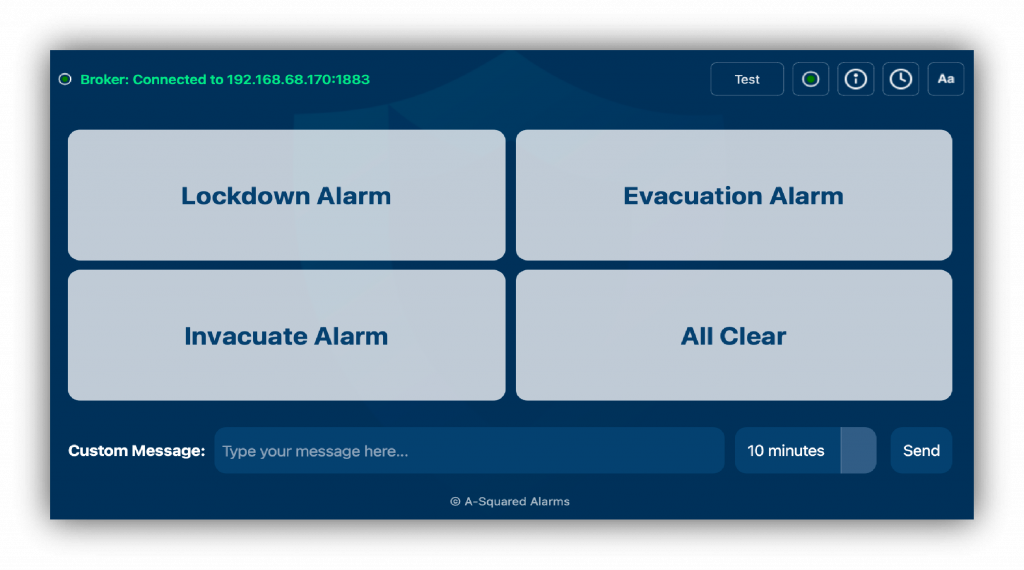
PopAlert® has been designed specifically to address this communication gap. It provides immediate, full-screen internal alerts that clearly instruct staff on whether a lockdown or evacuation is required. Because the alerts take over the entire screen, staff cannot miss the message, even in stressful or noisy environments. The system supports different alert types with customisable instructions, ensuring staff know exactly how to respond. PopAlert delivers these alerts simultaneously across all connected devices and remains operational even if the internet fails, as it runs entirely on-premises. It can also integrate with physical triggers such as panic buttons or external systems like Alertex, allowing organisations to respond quickly both inside and outside the building.
Training is another key component of readiness under Martyn’s Law. Staff must be taught the differences between lockdown and evacuation, understand their responsibilities during each scenario and feel confident in performing the necessary actions. This includes knowing how to secure rooms during a lockdown, how to guide people safely during an evacuation and how to support individuals who may require additional assistance. Regular drills help reinforce these procedures, and PopAlert can be used as part of training to simulate real-world communication during practice scenarios.
Ultimately, clear procedures and reliable communication are essential for keeping people safe. Emergencies create confusion, but when staff receive consistent instructions instantly, they can react more calmly and make better decisions. By distinguishing between lockdown and evacuation, preparing staff through training and using a system like PopAlert to deliver immediate instructions, organisations can greatly enhance their safety and emergency readiness.
Martyn’s Law is pushing organisations to think more deeply about how they respond to emergencies. With the right communication tools, staff training and practical planning, schools and venues can ensure they are ready for both lockdowns and evacuations. PopAlert® provides the fast, unmistakable internal alerts needed to support these actions, helping organisations stay compliant, protect their people and respond with confidence during critical moments.