

- info@a-squaredalarms.com

Martyn’s Law — also known as the Protect Duty — is new UK legislation designed to strengthen public safety by ensuring organisations have effective plans in place to respond to terror-related emergencies. Although the law is often discussed in relation to large venues, it also applies to schools, and the expectations placed on education providers will be significant. Schools are public-facing environments with large numbers of people on site every day, which places them directly within the scope of the legislation. Understanding how Martyn’s Law affects the education sector is essential for leadership teams preparing for compliance.
Martyn’s Law introduces new responsibilities for schools in areas such as emergency preparedness, communication, risk assessment, lockdown procedures, and staff training. While safeguarding is already a core responsibility, the legislation emphasises practical readiness, not just written policies. Its aim is to ensure that schools can respond quickly and effectively when an incident threatens the safety of pupils, staff or visitors.

Yes. The Protect Duty covers:
Primary schools
Secondary schools
Academies and colleges
Independent/private schools
Special educational needs schools
Any education provider that hosts public-facing activities — such as events, assemblies, parents’ evenings or after-school programmes — is included. Because of this, schools across the UK must begin assessing how prepared they are.
Schools will need to conduct a terrorism risk assessment to identify vulnerabilities such as access points, crowded areas and communication challenges. They must establish clear emergency procedures for lockdowns, invacuations, evacuations, safe routes and staff responsibilities. Training will play a crucial role, as all staff must be able to respond calmly and consistently during an emergency. Another core requirement is a reliable internal communication system that allows the school to send instant, site-wide alerts. Finally, schools must regularly test, review and update their plans to demonstrate ongoing compliance.
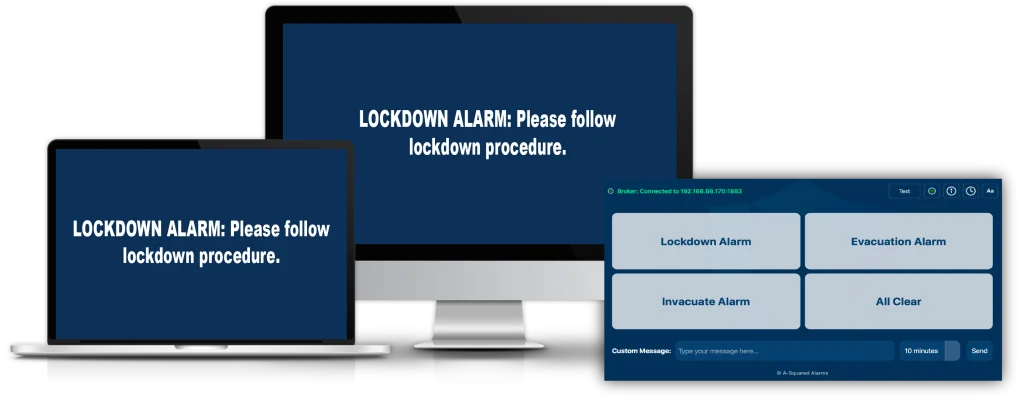
Communication is often the weakest point in school emergency planning. Email alerts may be delayed or ignored, radios can fail during noisy periods, alarms provide no written instructions, and relying on runners is far too slow. Martyn’s Law expects schools to have a communication method that is immediate, clear and impossible to miss. This is where digital alert systems become essential for compliance.
Yes. The Protect Duty covers:
Primary schools
Secondary schools
Academies and colleges
Independent/private schools
Special educational needs schools
Any education provider that hosts public-facing activities — such as events, assemblies, parents’ evenings or after-school programmes — is included. Because of this, schools across the UK must begin assessing how prepared they are.
Schools will need to conduct a terrorism risk assessment to identify vulnerabilities such as access points, crowded areas and communication challenges. They must establish clear emergency procedures for lockdowns, invacuations, evacuations, safe routes and staff responsibilities. Training will play a crucial role, as all staff must be able to respond calmly and consistently during an emergency. Another core requirement is a reliable internal communication system that allows the school to send instant, site-wide alerts. Finally, schools must regularly test, review and update their plans to demonstrate ongoing compliance.
Communication is often the weakest point in school emergency planning. Email alerts may be delayed or ignored, radios can fail during noisy periods, alarms provide no written instructions, and relying on runners is far too slow. Martyn’s Law expects schools to have a communication method that is immediate, clear and impossible to miss. This is where digital alert systems become essential for compliance.